

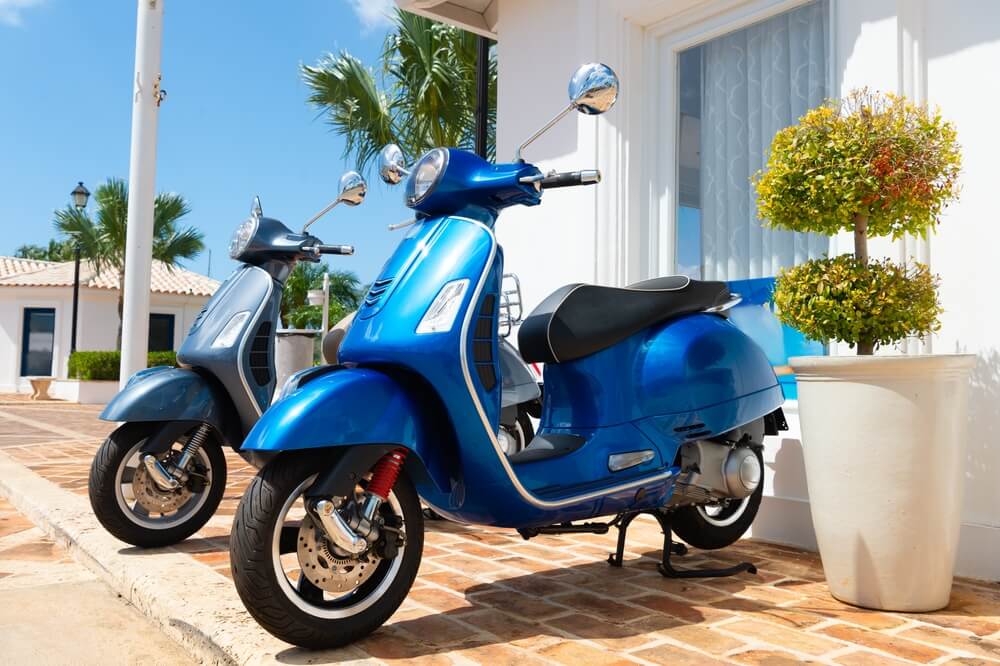

Colorado requires all moped and scooter riders to obey the traffic laws that apply to all other road users. But while you need a motorcycle license and insurance to ride a scooter with an engine larger than 50cc, moped drivers do not require any special type of license. You do still need insurance, however.
Understanding the differences between the specific laws that apply to mopeds and scooters can help you stay safe and street-legal.
What Is a Moped?
State law classifies mopeds as “low power scooters” (LPS), meaning that they have all the following characteristics:
- Three or fewer wheels
- Self-propelled
- No manual clutch
- Engine capacity is 50cc or smaller
Scooters with an engine capacity of more than 50cc or 4,476 watts are considered motorcycles in Colorado.
All moped drivers must follow the same traffic regulations and laws that other motor vehicles and bicycles must follow, including:
- Obeying traffic signals
- Giving pedestrians the right-of-way
- Riding with the flow of traffic
- Obeying speed limits
- Stopping at stop signs and red lights
It is worth noting that while bicyclists and e-bike riders may roll through stop signs and treat red traffic lights as stop signs, moped riders must treat stop signs and red lights as other motor vehicle operators must.
Do I Need a Driver’s License to Operate a Moped in Colorado?
While you must have a valid motorcycle license to ride a scooter with an engine of 50cc or larger, you don’t need a special license for a moped. To operate a moped in Colorado, you only need a valid basic driver’s license. You must also register your moped. Colorado moped registrations last three years, and the registration fee is $5.85.
Do I Need a Driver’s License If the Scooter Is Electric?
As with gas-powered scooters, license requirements for electric scooters depend on the vehicle’s power. If an electric scooter is 4,476 watts or less, it is considered a moped. That means you need a driver’s license. More powerful scooters require a motorcycle license.
What Types of Scooters or Mopeds Do Not Require a License in Colorado?
All scooters or mopeds require some type of license. Riders can operate any moped without a motorcycle license in Colorado. However, you will need a valid driver’s license. All scooters that are more powerful than 50cc or 4,476 watts require a valid motorcycle license.
Is a Helmet Required to Ride a Moped or Scooter?
Colorado moped laws require minors 17 years old or younger to wear a DOT-approved helmet while riding a moped or scooter. Adults are not required to wear a helmet while riding. However, helmet use can significantly reduce your likelihood of suffering a traumatic brain injury if you are involved in a moped accident.
Are Lights and Signals Required?
Colorado law requires moped and scooter riders to ensure their vehicles have the following safety features:
- A headlamp that is visible from 500 feet or more
- A reflector on the rear that is visible from 300 feet or more
- A horn, bell, or other noisemaker that is audible from 100 feet or more
- A brake that lets the moped skid when the driver applies it on a dry, flat surface
They are not required to have electronic signals.
Failing to follow these specifications may result in traffic citations. It may also increase your likelihood of being involved in an accident.
Can Electric Scooters Be Driven on Sidewalks?
Electric scooters that qualify as mopeds (4,476 watts or less) may operate anywhere bicycles may operate. That means you may use them on the road with other vehicles and in bike lanes. However, they are not allowed on most sidewalks.
Scooters with engines greater than 50cc or that operate at more than 4,476 watts also may not operate on sidewalks.
Are There Places I Cannot Drive a Moped or Scooter?
While scooters above 50cc or 4,476 watts can ride anywhere other vehicles may operate, mopeds are not permitted on interstate highways. This restriction is due to safety concerns for moped riders and their limited speed that’s likely to obstruct traffic. However, moped riders can use bicycle lanes that run alongside interstate highways.
Is Insurance Required for a Moped or Scooter?
Colorado law sets minimum insurance policy levels all vehicle owners must carry. This requirement applies to mopeds and scooters as well. The state’s minimum coverage requirements are as follows:
- $25,000 per person for bodily injury
- $50,000 per accident for bodily injury
- $15,000 for property damage
Carrying higher insurance coverage is always a good idea because accidents can easily lead to losses greater than these amounts. If another driver’s actions injure you in a moped or scooter accident, you can file a compensation claim against their insurance policy. If your losses exceed their policy coverage, you may need to file a personal injury lawsuit against them to hold them fully accountable.
Common Traffic Violations for Moped and Scooter Riders
Even experienced moped operators can inadvertently violate Colorado scooter laws if they do not pay close attention to the specific distinctions between vehicle classes. Law enforcement officers regularly issue citations for minor infractions that many riders assume are legal.
One major area of confusion involves lane splitting, which is the practice of driving between rows of stopped or moving vehicles. Under state law C.R.S. § 42-4-1503, lane splitting is strictly illegal for both low-power mopeds and high-capacity scooters. Riders must occupy a full lane just like a standard passenger car.
Under the influence (DUI) laws also apply to riders. Because mopeds and scooters are motorized vehicles, operating them while impaired by alcohol or drugs carries the exact same criminal penalties as driving a car. This includes potential jail time, heavy fines, and the suspension of your driver’s license.
What Should I Do After a Moped or Scooter Accident?
If you are involved in a collision while riding a moped on Colorado roads, it is vital to take the right steps immediately after the accident. To protect both your health and legal rights, follow our advice right away, and:
- Move to Safety: If you are able, move yourself and your moped out of the path of oncoming traffic to prevent secondary collisions.
- Call 911: The resulting police report serves as an indispensable paper trail to prove what actually happened.
- Document the Crash: Use your phone to take detailed photographs of the vehicles involved, the surrounding road conditions, and any visible injuries.
- Exchange Information: Collect names, phone numbers, insurance details, and driver’s license numbers from all drivers involved, as well as the eyewitnesses.
- Get to the Doctor: Even if you feel okay, visit a doctor immediately. Adrenaline can mask severe internal injuries or concussions that may worsen if left untreated.
How Comparative Negligence Affects Your Colorado Moped Claim
Colorado follows a modified comparative negligence system when resolving personal injury claims. This legal framework directly impacts how state scooter laws are applied during a settlement dispute. Under this rule, you can still recover financial compensation for your injuries as long as you are found to be less than 50 percent responsible for the accident.
However, rest assured, the insurance company will deduct whatever percentage of fault they can pin on you from your settlement check. For example, let us pretend a jury determined your total damages equal $10,000. But they find you were 30 percent at fault because you failed to use a required headlight at night. In this example, your payout will be reduced to $7,000. If your fault reaches 50 percent or higher, you are completely barred from recovering any compensation from the other party.
Why You Want a Legal Advocate to Navigate Colorado Moped Laws
Navigating insurance claims after an accident can be incredibly overwhelming. Insurance adjusters frequently try to exploit common misconceptions about local scooter laws to shift blame onto the rider and minimize their payouts. They might argue that your vehicle should not have been on a specific roadway or even downplay the severity of your injuries.
Do not let them bully you into accepting a lowball settlement. Partnering with an experienced personal injury attorney with The Wilhite Law Firm ensures your rights are fiercely protected, allowing you to focus entirely on your physical recovery. Our team combines the personalized, deeply rooted care of a local Colorado family firm with the massive resources and courtroom experience of a powerhouse legal team to fight for every dollar you deserve before time runs out.
Contact a Colorado Personal Injury Lawyer at The Wilhite Law Firm
Riding mopeds and scooters can be a fun and convenient way to get around town. But because they do not offer the same protection as passenger vehicles, being in a moped or scooter accident can lead to particularly devastating injuries. If someone else caused the accident, you may be eligible to recover compensation for medical bills, missed time at work, and more.
The experienced Colorado moped and scooter accident attorneys at The Wilhite Law Firm have the knowledge and skills to fight for the compensation you deserve. Contact our firm today for a free consultation to learn more about your legal options.